This is default featured slide 1 title

Go to Blogger edit html and find these sentences.Now replace these sentences with your own descriptions.This theme is Bloggerized by Lasantha Bandara - Premiumbloggertemplates.com.

This is default featured slide 2 title

Go to Blogger edit html and find these sentences.Now replace these sentences with your own descriptions.This theme is Bloggerized by Lasantha Bandara - Premiumbloggertemplates.com.

This is default featured slide 3 title

Go to Blogger edit html and find these sentences.Now replace these sentences with your own descriptions.This theme is Bloggerized by Lasantha Bandara - Premiumbloggertemplates.com.

This is default featured slide 4 title

Go to Blogger edit html and find these sentences.Now replace these sentences with your own descriptions.This theme is Bloggerized by Lasantha Bandara - Premiumbloggertemplates.com.

This is default featured slide 5 title

Go to Blogger edit html and find these sentences.Now replace these sentences with your own descriptions.This theme is Bloggerized by Lasantha Bandara - Premiumbloggertemplates.com.

Minggu, 26 Juni 2011

[Q886.Ebook] Download Ebook Hardware Design Verification: Simulation and Formal Method-Based Approaches, by William K. Lam

Download Ebook Hardware Design Verification: Simulation and Formal Method-Based Approaches, by William K. Lam

This is not around just how much this book Hardware Design Verification: Simulation And Formal Method-Based Approaches, By William K. Lam costs; it is not likewise concerning what kind of e-book you truly like to read. It has to do with what you could take and also obtain from reading this Hardware Design Verification: Simulation And Formal Method-Based Approaches, By William K. Lam You could favor to choose other publication; however, it does not matter if you attempt to make this publication Hardware Design Verification: Simulation And Formal Method-Based Approaches, By William K. Lam as your reading option. You will certainly not regret it. This soft file publication Hardware Design Verification: Simulation And Formal Method-Based Approaches, By William K. Lam can be your excellent close friend all the same.

Hardware Design Verification: Simulation and Formal Method-Based Approaches, by William K. Lam

Hardware Design Verification: Simulation and Formal Method-Based Approaches, by William K. Lam


Hardware Design Verification: Simulation and Formal Method-Based Approaches, by William K. Lam

Download Ebook Hardware Design Verification: Simulation and Formal Method-Based Approaches, by William K. Lam

Hardware Design Verification: Simulation And Formal Method-Based Approaches, By William K. Lam. Just what are you doing when having leisure? Chatting or surfing? Why do not you aim to review some e-book? Why should be reviewing? Checking out is just one of enjoyable and enjoyable task to do in your spare time. By reviewing from several sources, you could find new information and experience. The e-books Hardware Design Verification: Simulation And Formal Method-Based Approaches, By William K. Lam to check out will certainly many starting from scientific books to the fiction publications. It suggests that you can read the books based upon the need that you intend to take. Of course, it will certainly be various and also you can check out all book types any sort of time. As here, we will reveal you an e-book ought to be checked out. This e-book Hardware Design Verification: Simulation And Formal Method-Based Approaches, By William K. Lam is the option.

For everybody, if you wish to start joining with others to check out a book, this Hardware Design Verification: Simulation And Formal Method-Based Approaches, By William K. Lam is much advised. As well as you need to obtain the book Hardware Design Verification: Simulation And Formal Method-Based Approaches, By William K. Lam below, in the link download that we provide. Why should be below? If you desire various other kind of publications, you will always discover them as well as Hardware Design Verification: Simulation And Formal Method-Based Approaches, By William K. Lam Economics, national politics, social, sciences, religions, Fictions, and also much more publications are provided. These available publications remain in the soft files.

Why should soft documents? As this Hardware Design Verification: Simulation And Formal Method-Based Approaches, By William K. Lam, lots of people likewise will should get the book faster. Yet, often it's up until now way to get guide Hardware Design Verification: Simulation And Formal Method-Based Approaches, By William K. Lam, even in various other country or city. So, to relieve you in locating the books Hardware Design Verification: Simulation And Formal Method-Based Approaches, By William K. Lam that will sustain you, we aid you by offering the listings. It's not only the list. We will certainly give the suggested book Hardware Design Verification: Simulation And Formal Method-Based Approaches, By William K. Lam web link that can be downloaded directly. So, it will not require more times and even days to pose it and also other books.

Gather the book Hardware Design Verification: Simulation And Formal Method-Based Approaches, By William K. Lam start from currently. But the extra means is by collecting the soft file of the book Hardware Design Verification: Simulation And Formal Method-Based Approaches, By William K. Lam Taking the soft data can be conserved or saved in computer or in your laptop computer. So, it can be more than a book Hardware Design Verification: Simulation And Formal Method-Based Approaches, By William K. Lam that you have. The simplest method to disclose is that you can also conserve the soft documents of Hardware Design Verification: Simulation And Formal Method-Based Approaches, By William K. Lam in your ideal and also readily available gizmo. This problem will expect you frequently check out Hardware Design Verification: Simulation And Formal Method-Based Approaches, By William K. Lam in the extra times more than talking or gossiping. It will not make you have bad habit, but it will lead you to have better behavior to review book Hardware Design Verification: Simulation And Formal Method-Based Approaches, By William K. Lam.

Hardware Design Verification: Simulation and Formal Method-Based Approaches, by William K. Lam

The Practical, Start-to-Finish Guide to Modern Digital Design Verification

As digital logic designs grow larger and more complex, functional verification has become the number one bottleneck in the design process. Reducing verification time is crucial to project success, yet many practicing engineers have had little formal training in verification, and little exposure to the newest solutions. Hardware Design Verification systematically presents today's most valuable simulation-based and formal verification techniques, helping test and design engineers choose the best approach for each project, quickly gain confidence in their designs, and move into fabrication far more rapidly. College students will find that coverage of verification principles and common industry practices will help them prepare for jobs as future verification engineers.

Author William K. Lam, one of the world's leading experts in design verification, is a recent winner of the Chairman's Award for Innovation, Sun Microsystems' most prestigious technical achievement award. Drawing on his wide-ranging experience, he introduces the foundational principles of verification, presents traditional techniques that have survived the test of time, and introduces emerging techniques for today's most challenging designs. Throughout, Lam emphasizes practical examples rather than mathematical proofs; wherever advanced math is essential, he explains it clearly and accessibly.

Coverage includes

  • Simulation-based versus formal verification: advantages, disadvantages, and tradeoffs
  • Coding for verification: functional and timing correctness, syntactical and structure checks, simulation performance, and more
  • Simulator architectures and operations, including event-driven, cycle-based, hybrid, and hardware-based simulators
  • Testbench organization, design, and tools: creating a fast, efficient test environment
  • Test scenarios and assertion: planning, test cases, test generators, commercial and Verilog assertions, and more
  • Ensuring complete coverage, including code, parameters, functions, items, and cross-coverage
  • The verification cycle: failure capture, scope reduction, bug tracking, simulation data dumping, isolation of underlying causes, revision control, regression, release mechanisms, and tape-out criteria
  • An accessible introduction to the mathematics and algorithms of formal verification, from Boolean functions to state-machine equivalence and graph algorithms
  • Decision diagrams, equivalence checking, and symbolic simulation
  • Model checking and symbolic computation

Simply put, Hardware Design Verification will help you improve and accelerate your entire verification process--from planning through tape-out--so you can get to market faster with higher quality designs.


  • Sales Rank: #3360514 in Books
  • Published on: 2005-03-13
  • Original language: English
  • Number of items: 1
  • Dimensions: 9.36" h x 1.33" w x 7.20" l, 2.42 pounds
  • Binding: Hardcover
  • 624 pages

From the Back Cover

The Practical, Start-to-Finish Guide to Modern Digital Design Verification

As digital logic designs grow larger and more complex, functional verification has become the number one bottleneck in the design process. Reducing verification time is crucial to project success, yet many practicing engineers have had little formal training in verification, and little exposure to the newest solutions. Hardware Design Verification systematically presents today's most valuable simulation-based and formal verification techniques, helping test and design engineers choose the best approach for each project, quickly gain confidence in their designs, and move into fabrication far more rapidly. College students will find that coverage of verification principles and common industry practices will help them prepare for jobs as future verification engineers.

Author William K. Lam, one of the world's leading experts in design verification, is a recent winner of the Chairman's Award for Innovation, Sun Microsystems' most prestigious technical achievement award. Drawing on his wide-ranging experience, he introduces the foundational principles of verification, presents traditional techniques that have survived the test of time, and introduces emerging techniques for today's most challenging designs. Throughout, Lam emphasizes practical examples rather than mathematical proofs; wherever advanced math is essential, he explains it clearly and accessibly.

Coverage includes

  • Simulation-based versus formal verification: advantages, disadvantages, and tradeoffs
  • Coding for verification: functional and timing correctness, syntactical and structure checks, simulation performance, and more
  • Simulator architectures and operations, including event-driven, cycle-based, hybrid, and hardware-based simulators
  • Testbench organization, design, and tools: creating a fast, efficient test environment
  • Test scenarios and assertion: planning, test cases, test generators, commercial and Verilog assertions, and more
  • Ensuring complete coverage, including code, parameters, functions, items, and cross-coverage
  • The verification cycle: failure capture, scope reduction, bug tracking, simulation data dumping, isolation of underlying causes, revision control, regression, release mechanisms, and tape-out criteria
  • An accessible introduction to the mathematics and algorithms of formal verification, from Boolean functions to state-machine equivalence and graph algorithms
  • Decision diagrams, equivalence checking, and symbolic simulation
  • Model checking and symbolic computation

Simply put, Hardware Design Verification will help you improve and accelerate your entire verification process--from planning through tape-out--so you can get to market faster with higher quality designs.


About the Author

William K. Lam is senior engineering manager at Sun Microsystems Laboratories and the 2002 winner of the Chairman's Award for Innovation, Sun's highest award for technical achievement. He holds a Ph.D. in electrical engineering and computer science from the University of California, Berkeley, where he won the 1994 David J. Sakrison Memorial Award for distinguished Ph.D. thesis.


0131433474AB02072005

Excerpt. � Reprinted by permission. All rights reserved.

Two groups of people are essential to a successful design project: a design team and a verification team. Designers usually have formal training from schools. Many colleges have comprehensive curricula on logic design, ranging from introduction to digital design to advanced computer architecture. On the contrary, most verification engineers learn their trade on the job; few were educated as verification engineers in academia, although many schools are beginning to teach verification curriculum. In fact, a majority of verification engineers started out as designers and gradually transitioned to design verification. Unlike design techniques and methodologies, a broad range of verification knowledge is loosely organized and informally acquired through hands-on experience. Furthermore, the horizon of verification has been expanding at a rapid pace: The verification landscape is evolving every six months with new techniques, standards, and tools. Nevertheless, there are principles and techniques that have survived the test of time and prove to be cornerstones of verification.

This book collects and organizes a wide range of digital design verification techniques and methodologies commonly used in industry and presents them in a systematic fashion. The focus of the book is on digital logic design and verification. It does not cover verification of circuits with mixed-signal or radio frequency components. A goal of the book is to pass the vast amount of verification knowledge to college students and engineers so that they are better prepared for the workforce, and to speed up their learning pace. It is tempting to write a ten-minute verification engineering book that lists detailed practical tips that can be used immediately on the job. These quick-fix tips often become obsolete over a short period of time. On the other hand, presenting the principles only will not be immensely useful for practicing engineers. Thus, I decided to strike a balance between the two and present verification principles as well as common practices. It is my belief that only by understanding the principles can one truly grasp the essence of the practices and be creative about using them.

To the Audience

One targeted audience for this book includes undergraduate students at the junior or senior level or first-level graduate students. I will assume that these readers have a sound understanding of a hardware descriptive language, preferably Verilog, because Verilog is used for illustration purposes in most parts of the book. In addition, a rudimentary knowledge of logic design is beneficial. This book is an introduction to design verification. Through its study, students will learn the main ideas, tools, and methodologies used in simulation-based verification, and the principles behind formal verification. The materials presented are industry tested and widely used. At the end of each chapter, problems are presented as a means of refreshing the knowledge covered in the chapter. For those who want to explore certain topics in more depth, please refer to the citations listed in the bibliography.

The other targeted audience includes verification professionals who may have some verification experience but would like to get a systematic overview of the different areas in verification and an understanding of the basic principles behind formal verification. The prerequisites for this audience are similar to those for the first group: basic design knowledge and a hardware descriptive language. The first part of the book provides a comprehensive treatment of simulation-based verification methodology and serves as a refresher or an introduction to verification professionals. For many practicing engineers, formal verification tools appear to be a form of black magic that requires a doctorate in mathematics to comprehend. This book explains these tools and the working principles of formal verification. Before formal verification is discussed in depth, Chapter 7 reviews the basics of mathematics and computer algorithms required to understand verification algorithms fully.

As with every technology, there is no substitution for hands-on experience. I encourage you to get acquainted with verification tools by running some of the examples and problems in the book or designing a project that makes use of the tools described. Free CAD tools such as Verilog simulator, test bench development aid, and waveform viewer are available at www.verilog.net/free.html.

To the Instructor

This book is comprised of two parts. The first part addresses the conventional verification strategy-simulation-based verification-whereas the second part addresses the aspects of formal verification that are well established in academia and tested in industry. The two parts are self-contained and thus can be taught independently as deemed fit.

The first part describes many verification tools. Because the specifics of these tools differ from vendor to vendor and change from time to time, only pseudo common commands are used in this book. To reinforce learning these tools, I recommend that industrial tools be part of a verification laboratory (for instance, a simulator, a waveform viewer, a coverage tool, a bug tracking system, and a revision control system). Similarly, to solidify the knowledge of formal verification, commercial formal verification tools such as an HDL linter, a model checker, and an equivalence checker should be used during lab sessions.

This book has a companion instructor's manual that contains the solutions to all the problems at the end of each chapter. The instructor's manual is available on request to the publisher.

Organization of the Book

Again, this book is intended as an introduction to design verification. I will assume that you have an understanding of basic Verilog constructs. Even though the book is written using Verilog as the hardware description language, I made an effort to present ideas independent of Verilog. When the use of Verilog is unavoidable, the simplest Verilog constructs are used to allow readers unfamiliar with the language to grasp the main ideas.

As previously stated, this book consists of two parts. The first part is devoted to simulation-based verification and the second part discusses formal verification. Simulation-based verification is by far the most widely used methodology and is a necessary requirement for all verification engineers. Formal verification is a relatively new technology and it complements simulation-based verification. I believe that to utilize a technology best, one must first be equipped with an in-depth understanding of the internal working principles of that technology. As a result, instead of just studying a verification tool's operations at the user level-a topic better suited for user manuals-this book spends much time studying the fundamental principles of simulation and formal technology.

The first part--simulation technology--consists of Chapters 2 through 6, and these chapters are ordered similar to the usual sequence of operations encountered during a simulation verification process. We start with Chapter 2, checking for static errors. These are errors that can be detected without input vectors and must be eliminated before extensive simulation begins. In Chapter 3, we study the basic architectures of simulators. Event-driven and cycle-based simulation algorithms are presented first, followed by simulator operations and applications for which we discuss cosimulation, design profiling, common simulator options, and the user interface.

Before one can begin a simulation, one must construct a test bench to host the design. Chapter 4 discusses test bench design, initialization, stimuli generation, clock network, error injection, result assessment, and test configuration. After a design is free of static errors and is embedded in a test bench, it is ready to be simulated. But how should the design be simulated? Chapter 5 addresses the issues of what to simulate and how to measure the quality of the simulation. We will look at test plan design, generation of tests for the items in the test plan, output response assessment, assertion (particularly, SystemVerilog assertions), and verification coverage.

After a circuit is simulated and the bugs are discovered, the next step is to debug problems found during simulation. Chapter 6 presents widely used debugging techniques, including case reduction, check pointing, error tracing, trace dumping, and forward and backward debugging. In addition, Chapter 6 examines the four basic views of design: source code, schematic, waveform, and finite-state machine. We then examine the scenario after the bugs are fixed. The tools and methodology discussed include the revision control system, regression mechanism, and tape-out criteria.

The second part of the book--formal verification--consists of Chapters 7 through 9. Several chapters in the first part of the book can be studied in conjunction with the second. For example, Chapters 2, 4, 5, and 6 are also applicable to formal verification.

The key to understanding formal verification lies in an understanding of the theory behind it. Chapter 7 provides the basic mathematical background for the later chapters. The materials cover Boolean functions and representations, symmetric Boolean functions, finite-state machines and the equivalence algorithm, and graphic algorithms such as depth-first search and breadth-first search, and strongly connected components.

Chapter 8 presents a survey of decision diagrams, with an emphasis on binary decision diagrams. We then review SAT (satisfiability) as an alternative to decision diagrams. The chapter concludes with a look at applications of decision diagrams and SAT in equivalence checking and symbolic simulation.

Chapter 9 presents an in-depth study of symbolic model checking. First it presents automata and computational tree logic as a means of modeling temporal behavior with fairness constraints. It then discusses algorithms for checking a model against a temporal specification. Based on the model-checking algo...

Most helpful customer reviews

3 of 3 people found the following review helpful.
Excellent and Comprehensive Book
By Husam Abu-Haimed
I have read many books on hardware verification covering simulation, emulation, and formal verification. Lam's book is the most comprehensive and the best explained. The book covers simulation, test plans, coverage metrics, and formal verification. It covers the theory and the practical issues. HDL examples of test benches for various kinds of hardware properties and behaviors are provided in the book.

12 of 12 people found the following review helpful.
good depth and breadth on both simulation and formal stuff
By Steve "RTL" Weiss
Finally a book on both simulation and formal verification with good depth. My company uses both tools on a daily basis.

I always wanted to learn about formal verification. Many books I have are too mathematical to follow. This book gives an easy intro. to formal verification and leads to the inner working of algorithms in formal verification. The sections on equivalence checking and symbolic simulation are very enlightening. Now I am more confident working with formal tools, after I know the principles behind them.

The book is great on simulation-based verification. it has a lot of practical advices and its presentation is very well organized. The chapters on coding for verification is especially practical --- I put them into use right away. The testbench chapter gives not only examples but also provides an insightful overview of testbench architecture. I skimmed through the chapter on simulators and caught a couple of good insights on the architectures of various kinds of simulators. I haven't finished the book yet but it is so far so good.

The only problem is that the book is too big, 600 pages! Some of the stuff probably should belong to another book.

In summary, I think every verification and design engineer should read it to get a running start.

6 of 7 people found the following review helpful.
good graduate level text
By W Boudville
Lam addresses an increasingly troubling problem in semiconductor design. As the transistor count keeps climbing, how to adequately simulate and test a chip?

Well, simulation comes first. The book describes design verification, where by this Lam restricts himself to functional verification. This is itself a large field, as can be appreciated by what the book presents of it. The text gives a good account of key ideas like equivalence checking and property checking. Where the basic idea is to have a redundant check that will hopefully point out any errors.

Then simulations are considered. These take up a large portion of the text. One approach is to build a comprehensive set of input test vectors. Of course, usually the number of possible combinations is too large to test all of these. But Lam points out that often groupings of the input are possible, with you only needing to test a few values from each group.

Another approach is to start from a formal set of specifications. It may be fair to say that both involve different types of complexity.

Lam also helps the reader by furnishing an extended problem set at the end of each chapter. The problems are nontrivial enough to give the reader a good workout. Very suitable as a graduate text, as well as at the professional level.

See all 5 customer reviews...

Hardware Design Verification: Simulation and Formal Method-Based Approaches, by William K. Lam PDF
Hardware Design Verification: Simulation and Formal Method-Based Approaches, by William K. Lam EPub
Hardware Design Verification: Simulation and Formal Method-Based Approaches, by William K. Lam Doc
Hardware Design Verification: Simulation and Formal Method-Based Approaches, by William K. Lam iBooks
Hardware Design Verification: Simulation and Formal Method-Based Approaches, by William K. Lam rtf
Hardware Design Verification: Simulation and Formal Method-Based Approaches, by William K. Lam Mobipocket
Hardware Design Verification: Simulation and Formal Method-Based Approaches, by William K. Lam Kindle

Hardware Design Verification: Simulation and Formal Method-Based Approaches, by William K. Lam PDF

Hardware Design Verification: Simulation and Formal Method-Based Approaches, by William K. Lam PDF

Hardware Design Verification: Simulation and Formal Method-Based Approaches, by William K. Lam PDF

Sabtu, 25 Juni 2011

[R640.Ebook] Download PDF Blackwater, by Michael McDowell

Download PDF Blackwater, by Michael McDowell

The benefits to take for reading guides Blackwater, By Michael McDowell are pertaining to improve your life high quality. The life high quality will not just regarding the amount of knowledge you will certainly get. Even you review the enjoyable or enjoyable books, it will assist you to have enhancing life top quality. Feeling enjoyable will lead you to do something perfectly. Moreover, guide Blackwater, By Michael McDowell will certainly offer you the session to take as a good factor to do something. You might not be useless when reading this book Blackwater, By Michael McDowell

Blackwater, by Michael McDowell

Blackwater, by Michael McDowell


Blackwater, by Michael McDowell

Download PDF Blackwater, by Michael McDowell

Exactly what do you do to start reading Blackwater, By Michael McDowell Searching guide that you love to read initial or discover an interesting book Blackwater, By Michael McDowell that will make you really want to read? Everyone has distinction with their factor of reading a book Blackwater, By Michael McDowell Actuary, reviewing routine must be from earlier. Lots of people could be love to read, however not an e-book. It's not mistake. Somebody will certainly be tired to open the thick publication with little words to check out. In more, this is the actual condition. So do happen probably with this Blackwater, By Michael McDowell

There is without a doubt that publication Blackwater, By Michael McDowell will consistently offer you inspirations. Also this is just a publication Blackwater, By Michael McDowell; you could find many categories and also types of books. From entertaining to adventure to politic, and also sciences are all offered. As exactly what we explain, below our company offer those all, from well-known writers and also author around the world. This Blackwater, By Michael McDowell is among the collections. Are you interested? Take it currently. Just how is the way? Find out more this article!

When someone needs to visit the book stores, search store by establishment, shelf by shelf, it is really troublesome. This is why we provide the book compilations in this website. It will alleviate you to browse guide Blackwater, By Michael McDowell as you such as. By browsing the title, author, or writers of the book you really want, you could discover them quickly. In your home, office, or even in your method can be all ideal location within web connections. If you want to download and install the Blackwater, By Michael McDowell, it is quite simple then, because now we proffer the link to buy and make deals to download and install Blackwater, By Michael McDowell So easy!

Curious? Of course, this is why, we mean you to click the web link web page to go to, and afterwards you can take pleasure in the book Blackwater, By Michael McDowell downloaded until completed. You can conserve the soft documents of this Blackwater, By Michael McDowell in your gadget. Naturally, you will bring the device all over, will not you? This is why, whenever you have spare time, whenever you could appreciate reading by soft duplicate publication Blackwater, By Michael McDowell

Blackwater, by Michael McDowell

One of the greatest horror novels ever published, Michael McDowell's critically acclaimed, long out-of-print novel is now available in a six-volume illustrated box set with a new introduction by Poppy Z. Brite. McDowell was at the height of his powers when he wrote Blackwater, a six-part novel about the mysterious Elinor Dammert and her influence over the citizens of Perdido, Alabama, and her ghastly ability to use water to gain her hideous ends.

  • Sales Rank: #799045 in Books
  • Published on: 2015-03-03
  • Original language: English
  • Number of items: 1
  • Dimensions: 9.00" h x 6.00" w x 6.50" l, .0 pounds
  • Binding: Hardcover
  • 900 pages

Most helpful customer reviews

3 of 3 people found the following review helpful.
Blackwater: A Tale of A Town, a Family, and the River that shapes their lives.
By Marc Goldfinger
Blackwater is a unique story of a town flooded by a river and the mysterious woman who arises from it. Elinor is found on one of the floors of a large hotel after the water has receded a bit by a member of the Caskey family in a rowboat with his servant. It is dated in a positive way, true to it's time. Michael McDowell does a fantastic job developing the characters of the town of Perdido over a few decades in this 6 part story. The supernatural aspect of the tale is well done. I really liked the story. The river is as much of a character as the members of the Caskey family. Highly recommended for the avid reader but you have to love the darkness too.

1 of 1 people found the following review helpful.
A real treat !!!!!
By billy h.
The single most fabulous southern gothic novel ever written. Michael McDowell has no competition here !!! Flawless in MY opinion. THE ELEMENTALS, which I have just reread, is my second favorite. I enjoyed it more the second time than when I read it when it was first published in the 80's. What a tragic loss that Mr. McDowell left us so soon.

See all 2 customer reviews...

Blackwater, by Michael McDowell PDF
Blackwater, by Michael McDowell EPub
Blackwater, by Michael McDowell Doc
Blackwater, by Michael McDowell iBooks
Blackwater, by Michael McDowell rtf
Blackwater, by Michael McDowell Mobipocket
Blackwater, by Michael McDowell Kindle

Blackwater, by Michael McDowell PDF

Blackwater, by Michael McDowell PDF

Blackwater, by Michael McDowell PDF

Kamis, 23 Juni 2011

[V102.Ebook] Ebook Free How to Become God (The Hero-God Series Book 2), by Michael Faust

Ebook Free How to Become God (The Hero-God Series Book 2), by Michael Faust

Based upon some experiences of many individuals, it remains in reality that reading this How To Become God (The Hero-God Series Book 2), By Michael Faust can help them to make far better selection and give even more encounter. If you intend to be one of them, let's purchase this publication How To Become God (The Hero-God Series Book 2), By Michael Faust by downloading the book on link download in this website. You can get the soft documents of this publication How To Become God (The Hero-God Series Book 2), By Michael Faust to download and deposit in your readily available digital gadgets. What are you waiting for? Let get this book How To Become God (The Hero-God Series Book 2), By Michael Faust online and review them in any time and any kind of location you will check out. It will certainly not encumber you to bring heavy book How To Become God (The Hero-God Series Book 2), By Michael Faust inside of your bag.

How to Become God (The Hero-God Series Book 2), by Michael Faust

How to Become God (The Hero-God Series Book 2), by Michael Faust


How to Become God (The Hero-God Series Book 2), by Michael Faust

Ebook Free How to Become God (The Hero-God Series Book 2), by Michael Faust

How To Become God (The Hero-God Series Book 2), By Michael Faust. Negotiating with reading practice is no demand. Checking out How To Become God (The Hero-God Series Book 2), By Michael Faust is not kind of something marketed that you can take or otherwise. It is a point that will alter your life to life much better. It is things that will certainly provide you many points all over the world and also this cosmos, in the real life and also here after. As just what will certainly be offered by this How To Become God (The Hero-God Series Book 2), By Michael Faust, exactly how can you negotiate with the many things that has many advantages for you?

The benefits to take for reading the e-books How To Become God (The Hero-God Series Book 2), By Michael Faust are concerning improve your life quality. The life high quality will certainly not simply concerning how significantly knowledge you will get. Even you read the fun or amusing books, it will certainly assist you to have improving life top quality. Really feeling enjoyable will lead you to do something flawlessly. In addition, the publication How To Become God (The Hero-God Series Book 2), By Michael Faust will offer you the lesson to take as a good need to do something. You could not be ineffective when reviewing this publication How To Become God (The Hero-God Series Book 2), By Michael Faust

Never mind if you don't have adequate time to head to guide establishment as well as hunt for the favourite e-book to read. Nowadays, the on-line book How To Become God (The Hero-God Series Book 2), By Michael Faust is pertaining to give convenience of checking out behavior. You could not should go outside to look guide How To Become God (The Hero-God Series Book 2), By Michael Faust Searching and downloading and install the book qualify How To Become God (The Hero-God Series Book 2), By Michael Faust in this short article will offer you better remedy. Yeah, online book How To Become God (The Hero-God Series Book 2), By Michael Faust is a kind of electronic publication that you can obtain in the link download provided.

Why ought to be this on-line publication How To Become God (The Hero-God Series Book 2), By Michael Faust You might not should go somewhere to read guides. You could read this e-book How To Become God (The Hero-God Series Book 2), By Michael Faust each time as well as every where you really want. Even it is in our extra time or feeling burnt out of the jobs in the workplace, this corrects for you. Obtain this How To Become God (The Hero-God Series Book 2), By Michael Faust now and also be the quickest individual which finishes reading this publication How To Become God (The Hero-God Series Book 2), By Michael Faust

How to Become God (The Hero-God Series Book 2), by Michael Faust

"Be what you know you are." - Pindar�Is it possible to become God? Is the unconscious mind nothing other than the God portal, the Heaven gate?This is the extraordinary account by the ancient and controversial secret society known as the Pythagorean Illuminati of how it is possible for every human being to attain divinity.There are two vast obstacles to overcome, one relating to a lack of consciousness, and the other to an over-identification with consciousness. The followers of the Abrahamic religions are "bicameral", meaning that they are highly submissive, have little grasp of rationality, and obey "voices" emanating from their unconscious. Atheistic scientific materialists, on the other hand, are overly sensory and deny the existence of anything other than their mortal ego-consciousness, and doubt even that. They have cut themselves off from the most mysterious domain in existence: that of the two numbers zero and infinity (the singularity numbers) which define all of the mysteries of life.The God Program deconstructs all of the claims of scientific materialism and shows why they are false in relation to all of the most important issues of existence: life, mind, consciousness, God, the soul and the afterlife. Equally, the "revealed" religions of Abrahamism are shown to be rooted in the pre-conscious mind of the human race and to constitute a kind of mental illness and hatred of rationality. If anything, they are a manifestation of Devil worship.Have you ever asked where the laws of the Big Bang were stored prior to the Big Bang in order to be able to shape and direct that cosmic event? The God Program takes you on an astonishing journey back to the era before the Big Bang. It reveals how and why the material cosmos came into existence, and what the precise answer is to the ultimate question of "life, the universe and everything".It demonstrates how Jung's theory of the psyche can be traced back to the ideas of the Neoplatonist Plotinus, and illustrates why Jung's concept of the collective unconscious is the key to human apotheosis.The God Program also reveals the true nature of the world's most sacred object: the holy grail.This may be the most revolutionary book in history, presenting a unique and breathtaking view of reality. If you cannot find the answers to your profoundest questions in the God Program, you will find them nowhere.

  • Sales Rank: #797638 in eBooks
  • Published on: 2011-10-08
  • Released on: 2011-10-08
  • Format: Kindle eBook

Most helpful customer reviews

11 of 11 people found the following review helpful.
Would you like some fries with that attitude?
By Kelly Hanson
At first I was very excited about finding this book, hoping to advance my own understanding and knowledge. And it was interesting. However, there are issues:

1) I'm irritated by the constant judgmental attitude of the author(s) - (So, tell me how you really feel) calling people who don't agree with them morons, retards, and other insulting names, shouting (all caps) and using multiple exclamation points throughout the book. Though I agree that 'Abrahamists' are arrested in the mythical stage of development, there is no need for adding hostility to an already volatile mix. It's hard to get over the feeling that I'm being schooled by someone who is not yet a grown-up. Get off the pulpit and give me straight information minus your issues with duality. Spare us the manifesto. Be cleaner.

2) I couldn't make some of the leaps of logic to their conclusions. One example is the stance that heterosexuality is the way things *should* be, if something doesn't 'go wrong'. Also, there's no sense of understanding adaptive evolution. There are several stances taken that are sketchy if not downright ignorant. The conclusion is really disappointing.

3) These 'Illuminati' lack compassion and humility. Arrogance is problematic, but the lack of compassion is a huge issue.

4) I haven't seen any reference to Ken Wilbur's work, Integral Psychology and Integral Spirituality, with states and stages of development, and the multiple lines of intelligences. This synthesis of all world religions and psychology is information that is needed to round out the understandings presented in this book. The authors need this integral map for perspective - to see where they are at on the ladder of human development. They talk of integration but they don't seem to know that there is a well-known methodology already. They seem to me, in spite of their cognitive intelligence, to be ethically challenged, denigrating morals to the domain of submission and inferiority. In truth, when a person develops compassion, ethics come with it.

5) Nowhere have I seen any understanding of the Law of Interdependence or Interconnectedness, which would temper some of the thinking here. In fact, this text seems particularly Western and not integrated with Eastern realization; there are references and quotes touching Buddhism, Vedanta and Zen, but no *evidence* of realization in the narration. Mind, or Psyche is not just cognitive intelligence. Far from it.

6) The entire concept of certain life forms being superior to other life forms based on attributes of little mind (waking up, taking on templates, etc.) gives me pause. Who defines what has merit in a meritocracy? Although I'd like to believe that I have more value than a worm, an idiot or a brainwashed follower of a sadistic religion, because I am more conscious, complex, wise and compassionate, WHO is conscious? Isn't it the same consciousness that flows in a blade of grass? Isn't it the Ego, after all, that creates valuation? That finds itself *differentiated*? So I take issue with the authors' arrogance, talking about ego from the ego. It's like Freud talking about the Jews. Unconscious. In fact, I see the authors' shadow.

7) The authors continuously mention 'sweeping away' or 'ignoring' vast parts of humanity that are not sufficiently conscious in order to win a war against materialistic extraverts who currently rule the world. I challenge these people to look in the mirror and see how this very book creates a collective shadow by wishing to cast off part of the unity that comprises it. The only way to *win* is, in Ken Wilbur's words, to Transcend and Include. Hate never yet dispelled hate. Only love dispels hate. This is the truth, ancient and inexhaustible, said the Buddha.

I do feel like I learned or connected a few things in new ways, so I'm not going to give this 1 star. There's a lot of light missing here. The book doesn't deliver its title - ultimately, it tells us mysteriously to 'Run the God Program'. You'll probably learn alot more about becoming God from 'How To Know God - The Yoga Aphorisms of Pantanjali', translated by Isherwood & Prabhavananda. Also, there's this amazing TED talk (free) from Bob Thurman called 'We Can Be Buddhas'- you'll need to google that.

2 of 2 people found the following review helpful.
Good info yet misguided in certain areas
By Amazon Customer
While the message of destroying the old paradigm is correct the author makes a critical mistake in assuming that Islamists were responsible for 9/11 and does not understand the true significance of the illuminati or the Freemasons. The books of these sort always seem to be at the same 85% correct level. My guess is there is law of confusion going on here as this number has been consistent across multiple subjects regarding these topics.

1 of 1 people found the following review helpful.
How not to be fooled
By Myles Marriott
All books from the IO assist your reasoning, understanding. This book is a synthesis, a launching pad delving into psychology, persona, The Holy Grail. I recommend this reading and then onto "God Genesis". Not the other way round. If you read all the books then you will end up level 6-7. Be the lighthouse keeper, climb the stairs, confront the shadows and walk into the light with your prize.

See all 10 customer reviews...

How to Become God (The Hero-God Series Book 2), by Michael Faust PDF
How to Become God (The Hero-God Series Book 2), by Michael Faust EPub
How to Become God (The Hero-God Series Book 2), by Michael Faust Doc
How to Become God (The Hero-God Series Book 2), by Michael Faust iBooks
How to Become God (The Hero-God Series Book 2), by Michael Faust rtf
How to Become God (The Hero-God Series Book 2), by Michael Faust Mobipocket
How to Become God (The Hero-God Series Book 2), by Michael Faust Kindle

How to Become God (The Hero-God Series Book 2), by Michael Faust PDF

How to Become God (The Hero-God Series Book 2), by Michael Faust PDF

How to Become God (The Hero-God Series Book 2), by Michael Faust PDF

Rabu, 22 Juni 2011

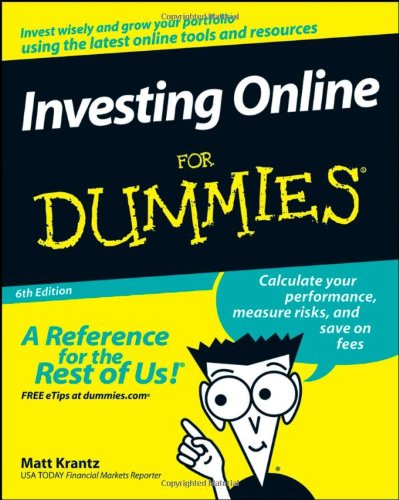
[O550.Ebook] Download PDF Investing Online For Dummies, by Matt Krantz

Download PDF Investing Online For Dummies, by Matt Krantz

Learn the method of doing something from many sources. One of them is this publication qualify Investing Online For Dummies, By Matt Krantz It is a very well known book Investing Online For Dummies, By Matt Krantz that can be referral to review now. This suggested book is among the all wonderful Investing Online For Dummies, By Matt Krantz compilations that are in this website. You will likewise find various other title and also motifs from different authors to look right here.

Investing Online For Dummies, by Matt Krantz

Investing Online For Dummies, by Matt Krantz


Investing Online For Dummies, by Matt Krantz

Download PDF Investing Online For Dummies, by Matt Krantz

Investing Online For Dummies, By Matt Krantz. Adjustment your habit to hang or squander the moment to only talk with your good friends. It is done by your everyday, do not you really feel bored? Currently, we will certainly show you the extra practice that, in fact it's an older behavior to do that could make your life more certified. When feeling bored of always talking with your friends all downtime, you can find guide entitle Investing Online For Dummies, By Matt Krantz and afterwards read it.

It can be one of your early morning readings Investing Online For Dummies, By Matt Krantz This is a soft data publication that can be survived downloading from on the internet publication. As known, in this sophisticated era, technology will ease you in doing some tasks. Even it is just reviewing the visibility of publication soft data of Investing Online For Dummies, By Matt Krantz can be added attribute to open. It is not only to open up as well as conserve in the gizmo. This time in the early morning and other spare time are to read the book Investing Online For Dummies, By Matt Krantz

Guide Investing Online For Dummies, By Matt Krantz will certainly always offer you good worth if you do it well. Finishing guide Investing Online For Dummies, By Matt Krantz to read will not end up being the only objective. The objective is by getting the favorable value from guide until the end of the book. This is why; you need to discover even more while reading this Investing Online For Dummies, By Matt Krantz This is not just how quick you check out a book and not only has the amount of you finished the books; it is about what you have acquired from guides.

Considering guide Investing Online For Dummies, By Matt Krantz to check out is additionally required. You can pick guide based on the preferred styles that you such as. It will certainly engage you to love checking out various other publications Investing Online For Dummies, By Matt Krantz It can be also concerning the need that obligates you to check out the book. As this Investing Online For Dummies, By Matt Krantz, you can find it as your reading book, also your favourite reading publication. So, locate your favourite publication right here as well as obtain the link to download and install the book soft documents.

Investing Online For Dummies, by Matt Krantz

Investors are becoming a lot more independent these days. With the stock market sinking and soaring from day to day, retirement plans becoming less certain, and a longer life expectancy in retirement, more people are looking for some control over their investments. If you’re one of them, Investing Online For Dummies, 6th Edition might be just what you’re looking for.

The Internet brings a world of investment resources to your desktop, but how do you find your way through the dizzying array of investment possibilities? The Dummies Way, of course! This book helps you set reasonable expectations, assess your risk tolerance, choose an asset allocation, analyze and select investments, and maximize your financial success. You’ll discover how to

  • Determine how much you can afford to invest
  • Choose an online broker
  • Research, trade, and track investments online
  • Measure the potential return of a stock
  • Maximize your investment knowledge and build a profitable portfolio
  • Buy bonds online
  • Understand options, commodities, and IPOs

If you’ve decided to take control of your investments but don’t want to make it your full-time job, Investing Online For Dummies, 6th Edition gives you the important information that will also give you confidence. Completely updated to cover all the new online tools and resources, it even provides some bonus assistance on the companion Web site.

  • Sales Rank: #1171054 in Books
  • Published on: 2007-12-26
  • Original language: English
  • Number of items: 1
  • Dimensions: 9.20" h x .80" w x 7.40" l, 1.30 pounds
  • Binding: Paperback
  • 408 pages

From the Back Cover
Research, trade, and track investments online

Take control of your investments, maximize investment knowledge, and build a profitable portfolio

The Internet brings a world of investment resources to your desktop, but how do you find your way through a dizzying array of investment possibilities? The Dummies Way, of course! This book helps you set reasonable expectations, assess your risk tolerance, choose an asset allocation, analyze and select investments, and maximize financial success.

Discover how to:

  • Determine how much you can afford to invest

  • Choose an online broker

  • Enter and execute trades

  • Measure the potential return of a stock

  • Buy bonds online

  • Understand options, commodities, and IPOs

About the Author
Matt Krantz is a financial writer and reporter who covers investments and financial markets for USA TODAY. He also answers a different reader question every weekday in his Ask Matt column at USATODAY.com.

Most helpful customer reviews

6 of 6 people found the following review helpful.
Information you didn't even know you needed
By Sam
Prior to reading this book I had done a fair bit of research into online brokers and having studied economics & accounting at university and worked in the fund management industry several years ago thought I had most of it covered. I was wrong. The thing about the internet is that all the information you need is there but if you don't know what you are looking for you won't find it. That is where this book excels. It tells you what you should be looking for AND points you in right direction to find further information as well as the tools you need for investing. Topics covered include; tracking your investments for performance results and tax purposes, the brokers and account types out there, analysis into the general workings of the stock market, asset allocation, stock screening tools, insider trading monitoring and a host of other tools and topics. The thing I really like about this book is that most of these books are written by people who have a financial interest in advising people or work for companies that do. Matt Krantz works for USA Today, yet despite the information and tools it offers, you never felt he was pushing you towards his companies site over any other. In fact if USA Today was mentioned at all, it was always after a number of other online resources which I liked.

11 of 11 people found the following review helpful.
Great Guide
By J. Brown
I bought this book a few months back, and recently decided to get into investing online. I think it's a great book, very informative. I constantly refer to it to make sure I'm doing things right. If you're wanting to start investing online, check this book out. I'm a former US Marine Infantryman, so if I can understand it, a 5 year old can! Not too much fancy talk in there, so it's easy to follow. They should rename the book to "Investing Online for DUMMIES and MARINES".

All joking aside, if you want a good "starter" book, check this book out. Like I said, I recently decided to actually invest, and I'm enjoying it.

0 of 0 people found the following review helpful.
Great read
By Natalie
I have read smaller introductory books to investing so I thought it was time to move onto the bigger stuff. It covers many aspects of investing, such as REITs, options, and asset allocation. If he doesn't elaborate on a certain topic, Krantz definitely gives you online tools to find out more about the topic. Also, the online chapters on international trading and emerging markets are worth reading too.

See all 35 customer reviews...

Investing Online For Dummies, by Matt Krantz PDF
Investing Online For Dummies, by Matt Krantz EPub
Investing Online For Dummies, by Matt Krantz Doc
Investing Online For Dummies, by Matt Krantz iBooks
Investing Online For Dummies, by Matt Krantz rtf
Investing Online For Dummies, by Matt Krantz Mobipocket
Investing Online For Dummies, by Matt Krantz Kindle

Investing Online For Dummies, by Matt Krantz PDF

Investing Online For Dummies, by Matt Krantz PDF

Investing Online For Dummies, by Matt Krantz PDF

Minggu, 19 Juni 2011

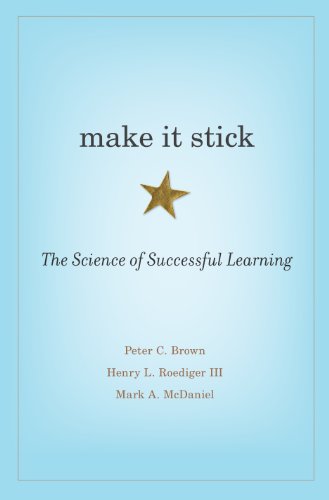
[B352.Ebook] Download PDF Make It Stick, by Peter C. Brown

Download PDF Make It Stick, by Peter C. Brown

In addition, we will certainly discuss you the book Make It Stick, By Peter C. Brown in soft documents types. It will certainly not interrupt you making heavy of you bag. You need just computer system tool or device. The link that we provide in this site is available to click and after that download this Make It Stick, By Peter C. Brown You understand, having soft data of a book Make It Stick, By Peter C. Brown to be in your gadget could make alleviate the readers. So by doing this, be a good reader now!

Make It Stick, by Peter C. Brown

Make It Stick, by Peter C. Brown


Make It Stick, by Peter C. Brown

Download PDF Make It Stick, by Peter C. Brown

Make It Stick, By Peter C. Brown. Exactly what are you doing when having leisure? Chatting or browsing? Why don't you aim to read some publication? Why should be checking out? Checking out is one of fun and enjoyable task to do in your leisure. By reading from numerous resources, you can locate brand-new information as well as experience. The publications Make It Stick, By Peter C. Brown to read will certainly be countless beginning with scientific publications to the fiction books. It means that you could check out guides based on the necessity that you intend to take. Obviously, it will be various and also you could review all book kinds at any time. As here, we will certainly reveal you a book need to be checked out. This e-book Make It Stick, By Peter C. Brown is the choice.

If you ally require such a referred Make It Stick, By Peter C. Brown book that will certainly give you worth, get the very best seller from us currently from many preferred authors. If you want to enjoyable publications, lots of novels, story, jokes, and also more fictions compilations are additionally released, from best seller to the most recent launched. You might not be confused to delight in all book collections Make It Stick, By Peter C. Brown that we will supply. It is not regarding the costs. It's about exactly what you need currently. This Make It Stick, By Peter C. Brown, as one of the very best vendors here will be among the best choices to read.

Discovering the right Make It Stick, By Peter C. Brown book as the appropriate requirement is sort of lucks to have. To start your day or to finish your day in the evening, this Make It Stick, By Peter C. Brown will be proper sufficient. You can just search for the floor tile right here and also you will get guide Make It Stick, By Peter C. Brown referred. It will certainly not bother you to cut your valuable time to choose shopping publication in store. By doing this, you will certainly likewise spend cash to pay for transport and various other time spent.

By downloading and install the on the internet Make It Stick, By Peter C. Brown publication right here, you will certainly obtain some advantages not to choose the book establishment. Simply connect to the web and start to download the web page web link we discuss. Currently, your Make It Stick, By Peter C. Brown prepares to enjoy reading. This is your time as well as your serenity to acquire all that you desire from this publication Make It Stick, By Peter C. Brown

Make It Stick, by Peter C. Brown

Drawing on cognitive psychology and other fields, Make It Stick offers techniques for becoming more productive learners, and cautions against study habits and practice routines that turn out to be counterproductive. The book speaks to students, teachers, trainers, athletes, and all those interested in lifelong learning and self-improvement.

  • Sales Rank: #27741 in eBooks
  • Published on: 2014-04-14
  • Released on: 2014-04-14
  • Format: Kindle eBook

Review
If you want to read a lively and engaging book on the science of learning, this is a must… Make It Stick benefits greatly from its use of stories about people who have achieved mastery of complex knowledge and skills. Over the course of the book, the authors weave together stories from an array of learners―surgeons, pilots, gardeners, and school and university students―to illustrate their arguments about how successful learning takes place… This is a rich and resonant book and a pleasurable read that will leave you pondering the processes through which you, and your students, acquire new knowledge and skills. (Hazel Christie Times Higher Education 2014-04-03)

Many educators are interested in making use of recent findings about the human brain and how we learn… Make It Stick [is] the single best work I have encountered on the subject. Anyone with an interest in teaching or learning will benefit from reading this book, which not only presents thoroughly grounded research but does so in an eminently readable way that is accessible even to students. (James M. Lang Chronicle of Higher Education 2014-04-23)

Aimed primarily at students, parents, and teachers, Make It Stick also offers practical advice for learners of all ages, at all stages of life… With its credible challenge to conventional wisdom, Make It Stick does point the way forward, with a very real prospect of tangible and enduring benefits. (Glenn C. Altschuler Psychology Today 2014-04-10)

Presents a compelling case for why we are attracted to the wrong strategies for learning and teaching―and what we can do to remedy our approaches… In clear language, Make It Stick explains the science underlying how people learn. But the authors don’t simply recite the research; they show readers how it is applied in real-life learning scenarios, with engaging stories of real people in academic, professional, and sports environments… The learning strategies proposed in this book can be implemented immediately, at no cost, and to great effect… Make It Stick will help you become a much more productive learner. (Stephanie Castellano TD Magazine 2014-11-08)

If I could, I would assign all professors charged with teaching undergraduates one book: Make It Stick: The Science of Successful Learning… It lays out what we know about the science of learning in clear, accessible prose. Every educator―and parent, and student, and professional―ought to have it on their own personal syllabus. (Annie Murphy Paul The Brilliant blog 2014-02-07)

This is a quite remarkable book. It describes important research findings with startling implications for how we can improve our own learning, teaching, and coaching. Even more, it shows us how more positive attitudes toward our own abilities―and the willingness to tackle the hard stuff―enables us to achieve our goals. The compelling stories bring the ideas out of the lab and into the real world. (Robert Bjork, University of California, Los Angeles)

Learning is essential and life-long. Yet as these authors argue convincingly, people often use exactly the wrong strategies and don't appreciate the ones that work. We’ve learned a lot in the last decade about applying cognitive science to real-world learning, and this book combines everyday examples with clear explanations of the research. It’s easy to read―and should be easy to learn from, too! (Daniel L. Schacter, author of The Seven Sins of Memory)

For a deeper dig into the science of learning, make sure to pick up Make It Stick. It’s an illuminating read. (Drake Baer Business Insider 2014-06-18)

About the Author
Peter C. Brown is a writer and novelist in St. Paul, Minnesota.

Henry L. Roediger III is James S. McDonnell Distinguished University Professor of Psychology at Washington University in St. Louis.

Mark A. McDaniel is Professor of Psychology and Director of the Center for Integrative Research on Cognition, Learning, and Education (CIRCLE) at Washington University in St. Louis.

Most helpful customer reviews

362 of 373 people found the following review helpful.
There's How You Think You Learn, and There's How You Learn!
By Kevin Currie-Knight
Okay, well maybe I am overstating that a little. But the main "thesis" of Peter Brown's book - aside from being a summary of what cognitive science data shows about how we learn - is basically that many of the things we often assume about learning are wrong. Here are some of them: we learn best by reading and rereading a passage until we really understand it. WRONG! We learn best when we isolate a skill and practice it over and over again. WRONG! We all have learning styles that are the way we learn best. WRONG! IQ (or something like it) imposes relatively firm limits on how much information we can absorb. WRONG!

In this pretty easy-reading book, Peter Brown summarizes some of the latest findings in cognitive science, and many of these findings contradict what is often assumed about learning. First, many k-12 and college students are taught to (and do) use the 'reread and highlight' method to try and absorb content. Well, while this works to an extent, it leads more to an illusion of mastery than mastery. What works better? Read the content and quiz yourself; information retrieval is the key. Retrieving helps to build stronger connections in the brain that will lock information into memory. What's more - and this is another chapter - the harder the retrieval, the stronger your retention of what is retrieved. (So, writing a short essay recalling the concepts works better than true/false and multiple choice recall.)

Another myth? While we all certainly have learning preferences (I like to receive my information in written form), that doesn't mean we learn best when receiving information in that form (I can do as well when I receive information audibly as when it is written, even though I prefer the latter). Brown reviews literature that shows that, at least as of now, there is no evidence that shows that how one receives information substantially affects how well we learn the material (after all, hearing or reading a phone number is immaterial to what i am remembering: not the sound or sight of the number, but the number itself). But what they do find is that whether one is an "example learner" or a "rule learner" does have an impact in how well one learns. That is, those who see and practice a math problem and are able to see what the rules are behind the example and commit the rule, rather than the example, to memory will tend to learn better. Also, another factor that affects how well we learn is our mindset, whether we learn for mastery or learn for performance. Those who learn for performance - so that they can show how good they are - tend to tackle learning new things (things that might make them look bad) with trepidation, but those who learn for mastery aspire to acquire new skills openly, without regard to whether they will fail before mastering.

These are just some of the lessons from this book. Whether you are a student, teacher, professor, coach, trainer, or any other professional whose job entails teaching others, this is a good book to have. (I'm a professor in a College of Education, and I definitely plan on allowing what I've gleaned from this book to inform my practice.) It is quite informative not only by way of learning theory, but backs up the theory with both empirics and suggestions for practice. Good one.

121 of 126 people found the following review helpful.
How the Mind Learns - a how to guide, with stories
By A. Mazonian
Is there anything new in this book? I believe there is sage advice in it for many of us.
That our brains adapt is good but also bad for studying. We become bored.

For many of us, we were never taught how our minds work and how we should leverage its natural processes to learn. Sometimes, practice or studying feels painfully slow and we often switch to another method that feels good. Unfortunately, we often fail at assessing how much we're learning and have actually learned.

Some students were never taught how to learn, and had few, if any, good teachers/mentors.
Some teachers were never taught how to teach, and have forgotten what it was like to be a student.
This book is for those both groups. The examples and advice for teachers and corporate trainers is also well written and useful.

If you have had good teachers or learning examplars, you might find this book less valuable than will most people.

SUMMARY:
PROs: This book will show you how to structure your learning and assessment processes to learn and confirm you're actually retaining the material. It provides 27 pages of endnotes on scientific studies that support its recommendations. Having read and applied the principles of both MIS and WSSK (see below), I can say they do work, very well.

CONs: Be prepared to look for what you want. Most of us will focus on the prescriptions of Chapter 8: e.g. avoid rereading as a primary study method, and do use the blank paper assessment test, etc..
=====

While reading, I noticed two points made by the authors that will shape your experience:
1) page ix in the Preface: "first author is a storyteller"
2) page 200: "early readers (of the book draft) urged the author to get specific with practical advice"

I agree with reviewers Soumen, T. Pagni, Economist: yes, the book could've been much shorter and focused on the advice.
I also agree with the numerous reviewers who praise it: yes it provides excellent practical insight into the best ways to learn (both physical and mental tasks).

I will now use the book to evaluate the book.
1) Interpret/Elaborate/Infer from what I'm reading:
Why is a storyteller the first author? I'm glad they told me. I'm now prepared to wade through long winded stories to find the main points.

2) Find the underlying rules/principles in what I've read:
- Allow time to forget. You MUST give yourself time to partially, but not completely, forget the material. Then give yourself time to struggle with recalling it.
- Effortful (i.e. NOT effortless!) recall is good. It dramatically increases retention.
- sustained, deliberate practice, even when it feels ponderous, is helping me learn
- Trust the process of study, forget, retrieve.
- Reflection is a form of retrieval practice.

3) Scatter/Vary/Mix the information while you're studying it.
By mixing the precepts in with the stories, the patterns were harder to see. I had to pick up the book several times because I was so annoyed by all the storytelling. However, DURING REFLECTION away from the text, I realized they were deliberately embedding kernels in the stories and forcing me to look for them. Upon revisiting the material, I found myself *wanting* to find and connect the ideas spread across the stories and the book. Clever, and more effective than giving me a list to memorize. During retrieval practice, I actually started remembering some of the advice from the stories, moreso than from the explicit recommendations.

4) Change the material BEFORE you've mastered it in that session
What are they trying to teach me? Sometimes before they "got to the point", they switched to yet another story (!)
This made me really focus on connecting what I read previously to what I was currentl reading.
Thankfully, the chapters often end with a "Takeaways" section.

RELATE IT TO WHAT I ALREADY KNOW:
I consider this book (MIS) a valuable complement to What Smart Students Know by A. Robinson (WSSK).
WSSK tells you in much greater detail what to do while you are a matriculating student i.e. how to approach the conventional schooling process, how to assess class/book structure, how to relate the material to what you've learned, what specifically you should during the pre-study, study and post-study periods.

MIS does present specific study methods but it also presents the bigger picture of learning:
Why the "learn via re-reading" intuition is wrong, yet feels right.
Why the "learn via struggling" process is right, yet feels wrong.

In general,
WSSK fully develops the terse advice of MIS p207: Elaborate/question/interpret what you're reading
MIS fully develops the terse advice WSSK p118: Quiz yourself Periodically.
Both are excellent resources for improving your habits for studying from books.

Personally, the advice in this book is worth far more than the cost of $21, and a few hours of reading, reflection and note-taking that I paid for it. I do recommend you buy it and apply its principles, even to itself.

37 of 38 people found the following review helpful.
Finally a learning book based on science!
By Jeremey Donovan
Summary of the key concepts in the book:

Conventional Wisdom: Make learning easy
Best practice: Design learning with desirable difficulties
Discussion: “Learning is deeper and more durable when it is effortful.” “Difficulties that elicit more effort and that slow down learning… will more than compensate for their inconvenience by making the learning stronger, more precise, and more enduring. Short-term impediments that make for stronger learning have come to be called desirable difficulties.” “Don’t assume you are doing something wrong if the learning feels hard.” “Not all difficulties in learning are desirable ones. Anxiety while taking a test seems to represent an undesirable difficulty.” Slow down to find meaning. Always read prior to the lecture. “Training has to be engaging in order to hold employees’ attention.”

Conventional Wisdom: Concentrate on one topic at a time (aka. massed practice)
Best practice: Interleave different but related topics
Discussion: “Learning from interleaved practice feels slower than learning from massed practice.” While interleaving can impede performance during initial learning (tests taken immediately after exposure), interleaving has been show to boost “final test performance by a remarkable 215 percent.” In addition, “commonalities… learned through massed practice proved less useful than the differences … learned through interleaving.” “In interleaving, you don’t move from a complete practice set of one topic to go to another. You switch before each practice is complete… You need to shuffle your flashcards.”

Conventional Wisdom: Reread material multiple times and in close succession
Best practice: Space repetition
Discussion: “Repetition by itself does not lead to good long-term memory… It makes sense to reread a text once if there’s been a meaningful lapse [at least a day in between] since the first reading.” “The increased effort required to retrieve the learning after a little forgetting has the effect of retriggering consolidation, further strengthening memory.” “Design quizzing and exercises to reach back to concepts and learning covered earlier in the term, so that retrieval practices continues and the learning is cumulative.” Spiral upward at increasing levels of difficulty with each re-exposure.

Conventional Wisdom: Reread to lock-in knowledge
Best practice: Focus on effortful recall of facts or concepts or events from memory (aka. Retrieval practice)
Discussion: “Retrieving knowledge and skill from memory should become your primary study strategy in place of rereading.” There are many methods of retrieval practice. Elaboration, expressing new material in your own words and connecting it with what you already know to find new layers of meaning, for instance by writing daily summaries, is the most effective. Moreover, “cultivating the habit of reflecting on ones’ experiences, of making them into a story, strengthens learning.” Essays and short answer tests are the next most effective durable learning strategies because they involve “Generation… an attempt to answer a question… before being shown the answer”, followed by practice with flash cards, reflection, and, least effective though still useful, multiple choice or true/false questions. To foster this, convert main points into questions to answer during subsequent studying rather than (or in addition to) highlighting and underling,

Conventional Wisdom: Conduct pop-quizzes and high-stakes post-testing with a goal toward errorless results
Best practice: Conduct frequent, predictable, low-stakes testing (including pre-testing)
Discussion: “Trying to solve a problem before being taught the solution leads to better learning, even when errors are made in the attempt.” In fact, “making mistakes and correcting them builds the bridges to advanced learning.” In addition, frequent quizzing – especially when quizzes are announced in advance - actually reduces learner anxiety. With respect to anxiety, the peak-end rule applies; people judge experiences based on how they were at the peak and at the end. Appreciate that “errors are a natural part of learning.” “Make quizzing and practice exercises count toward the course grade, even if for very low stakes.” Set “clear learning objectives prior to each class.”

Conventional Wisdom: Match instructional style to each learner’s preference
Best practice: Match instructional style to the nature of the content
Discussion: While people do have preferred learning styles (ex: visual, auditory, kinesthetic, tactile), empirical research does not support the notion that learning in your preferred style leads to superior outcomes. “When instructional style matches the nature of the content, all learners learn better, regardless of their differing preferences for how the material is taught.”

Conventional Wisdom: Memorize
Best practice: Extract underlying principles (aka “rule learning” and “structure building”)
Discussion: “It is better to solve a problem than to memorize a solution.” “Mnemonic devise are sometimes discounted as tricks of memory, not tools that fundamentally add to learning, and in a sense this is correct. The value of mnemonics to raise intellectual abilities comes after mastery of new material.”

Conventional Wisdom: Learn abstract concepts
Best practice: Learn using methods and examples that are concrete and personal
Discussion: “The kind of retrieval practice that proves most effective is one that reflects what you’ll be doing with the knowledge later. It’s not just what you know, but how you practice what you know that determines how well the learning serves you later.” Simulations and role-playing are excellent techniques. “Difficulties that don’t strengthen the skills you will need, or the kinds of challenges you are likely to encounter in the real-world application of your learning, are not desirable.” “Practice like you play, because you will play like you practice.” “Sustained deliberate practice… [is] goal-directed, often solitary, and consists of repeated striving to reach beyond your current level of performance.”

Conventional Wisdom: Read without pausing
Best practice: Spend 40% of time reading and 60% of time “looking up from the material and silently reciting” what it contains.

Conventional Wisdom: Provide immediate feedback
Best practice: Delay feedback
Discussion: “Delaying the feedback briefly produces better long-term learning than immediate feedback.” That said, receiving immediate corrective feedback is better than receiving no feedback at all.

Conventional Wisdom: Review all concepts equally
Best practice: Disproportionately focus on the least familiar material (aka dynamic testing)
Discussion: To increase frequency of practice on less familiar material without completely ignoring the most familiar material, use the Leitner box method. “Think of it as a series of four file-card boxes. In the first are the study materials… that must be practices frequently because you often make mistakes in them. In the second box are the cards you’re pretty good at, and that box gets practiced less often than the first, perhaps by half. The cards in the third box are practiced less often than those in the second box, and so on.”

Conventional Wisdom: Accept that IQ is fixed
Best practice: Focus on mindset
Discussion: “Average IQs have risen over the past century with changes in living conditions... IQ is a product of genes and environment” including increased stimulation, nurturing, nutrition “One difference that matters a lot is how you see yourself and your abilities. As the maxim goes, ‘Whether you think you can or you think you can’t, you’re right.’” Adopt a growth mindset rather than a fixed mindset; “consider your expertise to be in a continuing state of development.” “Success is less dependent on IQ than on grit, curiosity, and persistence.” Knowledge is a foundational element of creativity, critical thinking, and application. “The upper limits of your performance on any cognitive or manual skill may be set by factors beyond your control, such as you intelligence and the natural limits of your ability, but most of us can learn to perform nearer to our full potential in most areas by discovering our weaknesses and working to bring them up.” “Achieving expertise in any field if particular to that field… The central idea here is that expert performance is a product of the quantity of and the quality of practice, not of genetic predisposition, and that becoming expert is not beyond the reach of normally gifted people who have the motivation, time, and discipline to pursue it.”

Conventional Wisdom: Trust your own sense of mastery
Best practice: Calibrate your judgment
Discussion: “Calibration is the act of aligning your judgments of what you know and don’t know with objective feedback so as to avoid being carried off by the illusions of mastery that catch many learning by surprise at test time.”

Note: This book practices what it preaches with lots and lots of repetition. The authors are up-front about that but it does get well... repetitive.

See all 364 customer reviews...

Make It Stick, by Peter C. Brown PDF
Make It Stick, by Peter C. Brown EPub
Make It Stick, by Peter C. Brown Doc
Make It Stick, by Peter C. Brown iBooks
Make It Stick, by Peter C. Brown rtf
Make It Stick, by Peter C. Brown Mobipocket
Make It Stick, by Peter C. Brown Kindle

Make It Stick, by Peter C. Brown PDF

Make It Stick, by Peter C. Brown PDF

Make It Stick, by Peter C. Brown PDF

[Q763.Ebook] Download Ebook An economic survey of ancient Rome., by Tenney Broughton, T. Robert S. Frank

Download Ebook An economic survey of ancient Rome., by Tenney Broughton, T. Robert S. Frank

An Economic Survey Of Ancient Rome., By Tenney Broughton, T. Robert S. Frank. It is the time to improve and refresh your ability, expertise as well as experience consisted of some enjoyment for you after very long time with monotone points. Operating in the workplace, visiting examine, gaining from test and also more activities may be finished as well as you have to begin new things. If you really feel so worn down, why don't you attempt brand-new point? An extremely easy thing? Checking out An Economic Survey Of Ancient Rome., By Tenney Broughton, T. Robert S. Frank is what we provide to you will certainly understand. As well as guide with the title An Economic Survey Of Ancient Rome., By Tenney Broughton, T. Robert S. Frank is the recommendation now.

An economic survey of ancient Rome., by Tenney Broughton, T. Robert S. Frank

An economic survey of ancient Rome., by Tenney Broughton, T. Robert S. Frank


An economic survey of ancient Rome., by Tenney Broughton, T. Robert S. Frank

Download Ebook An economic survey of ancient Rome., by Tenney Broughton, T. Robert S. Frank

Book fans, when you need a new book to review, discover the book An Economic Survey Of Ancient Rome., By Tenney Broughton, T. Robert S. Frank below. Never ever worry not to discover what you require. Is the An Economic Survey Of Ancient Rome., By Tenney Broughton, T. Robert S. Frank your required book now? That holds true; you are actually a great viewers. This is a perfect book An Economic Survey Of Ancient Rome., By Tenney Broughton, T. Robert S. Frank that originates from fantastic author to show to you. The book An Economic Survey Of Ancient Rome., By Tenney Broughton, T. Robert S. Frank provides the very best experience as well as lesson to take, not just take, however additionally find out.

Yet here, we will certainly reveal you incredible point to be able consistently review the book An Economic Survey Of Ancient Rome., By Tenney Broughton, T. Robert S. Frank anywhere and whenever you take place and also time. Guide An Economic Survey Of Ancient Rome., By Tenney Broughton, T. Robert S. Frank by just could aid you to realize having the e-book to check out each time. It won't obligate you to consistently bring the thick e-book anywhere you go. You can merely maintain them on the kitchen appliance or on soft documents in your computer system to constantly read the space at that time.

Yeah, hanging out to check out the book An Economic Survey Of Ancient Rome., By Tenney Broughton, T. Robert S. Frank by on-line can likewise provide you good session. It will ease to interact in whatever problem. By doing this can be much more appealing to do and also much easier to review. Now, to obtain this An Economic Survey Of Ancient Rome., By Tenney Broughton, T. Robert S. Frank, you could download in the web link that we give. It will assist you to obtain easy way to download and install the book An Economic Survey Of Ancient Rome., By Tenney Broughton, T. Robert S. Frank.

Guides An Economic Survey Of Ancient Rome., By Tenney Broughton, T. Robert S. Frank, from basic to complex one will be a very helpful operates that you can take to alter your life. It will certainly not give you unfavorable declaration unless you don't get the significance. This is definitely to do in reading a book to conquer the significance. Generally, this publication qualified An Economic Survey Of Ancient Rome., By Tenney Broughton, T. Robert S. Frank is read since you actually such as this kind of publication. So, you can get much easier to recognize the impression and also significance. Again to always keep in mind is by reviewing this publication An Economic Survey Of Ancient Rome., By Tenney Broughton, T. Robert S. Frank, you can fulfil hat your curiosity beginning by completing this reading e-book.

An economic survey of ancient Rome., by Tenney Broughton, T. Robert S. Frank

  • Published on: 1959
  • Binding: Paperback

Most helpful customer reviews

See all customer reviews...

An economic survey of ancient Rome., by Tenney Broughton, T. Robert S. Frank PDF
An economic survey of ancient Rome., by Tenney Broughton, T. Robert S. Frank EPub
An economic survey of ancient Rome., by Tenney Broughton, T. Robert S. Frank Doc
An economic survey of ancient Rome., by Tenney Broughton, T. Robert S. Frank iBooks
An economic survey of ancient Rome., by Tenney Broughton, T. Robert S. Frank rtf
An economic survey of ancient Rome., by Tenney Broughton, T. Robert S. Frank Mobipocket
An economic survey of ancient Rome., by Tenney Broughton, T. Robert S. Frank Kindle

An economic survey of ancient Rome., by Tenney Broughton, T. Robert S. Frank PDF

An economic survey of ancient Rome., by Tenney Broughton, T. Robert S. Frank PDF

An economic survey of ancient Rome., by Tenney Broughton, T. Robert S. Frank PDF

Sabtu, 18 Juni 2011

[H286.Ebook] PDF Download Mastering Hurst Cycle Analysis: A modern treatment of Hurst's original system of financial market analysis, by Christopher Grafton

PDF Download Mastering Hurst Cycle Analysis: A modern treatment of Hurst's original system of financial market analysis, by Christopher Grafton

Well, still puzzled of the best ways to obtain this book Mastering Hurst Cycle Analysis: A Modern Treatment Of Hurst's Original System Of Financial Market Analysis, By Christopher Grafton right here without going outside? Just link your computer or kitchen appliance to the web as well as begin downloading and install Mastering Hurst Cycle Analysis: A Modern Treatment Of Hurst's Original System Of Financial Market Analysis, By Christopher Grafton Where? This web page will show you the link web page to download Mastering Hurst Cycle Analysis: A Modern Treatment Of Hurst's Original System Of Financial Market Analysis, By Christopher Grafton You never ever worry, your favourite publication will be faster your own now. It will certainly be considerably simpler to delight in checking out Mastering Hurst Cycle Analysis: A Modern Treatment Of Hurst's Original System Of Financial Market Analysis, By Christopher Grafton by online or obtaining the soft documents on your gizmo. It will certainly despite who you are as well as exactly what you are. This publication Mastering Hurst Cycle Analysis: A Modern Treatment Of Hurst's Original System Of Financial Market Analysis, By Christopher Grafton is written for public and you are among them that could take pleasure in reading of this publication Mastering Hurst Cycle Analysis: A Modern Treatment Of Hurst's Original System Of Financial Market Analysis, By Christopher Grafton

Mastering Hurst Cycle Analysis: A modern treatment of Hurst's original system of financial market analysis, by Christopher Grafton

Mastering Hurst Cycle Analysis: A modern treatment of Hurst's original system of financial market analysis, by Christopher Grafton


Mastering Hurst Cycle Analysis: A modern treatment of Hurst's original system of financial market analysis, by Christopher Grafton

PDF Download Mastering Hurst Cycle Analysis: A modern treatment of Hurst's original system of financial market analysis, by Christopher Grafton

Mastering Hurst Cycle Analysis: A Modern Treatment Of Hurst's Original System Of Financial Market Analysis, By Christopher Grafton. What are you doing when having leisure? Talking or scanning? Why don't you attempt to check out some e-book? Why should be reviewing? Reading is just one of enjoyable as well as delightful task to do in your extra time. By reading from several sources, you can locate brand-new information as well as experience. The e-books Mastering Hurst Cycle Analysis: A Modern Treatment Of Hurst's Original System Of Financial Market Analysis, By Christopher Grafton to read will certainly many beginning with clinical books to the fiction publications. It suggests that you can check out guides based upon the necessity that you intend to take. Naturally, it will certainly be different and you can review all e-book types whenever. As right here, we will certainly show you a publication ought to be read. This publication Mastering Hurst Cycle Analysis: A Modern Treatment Of Hurst's Original System Of Financial Market Analysis, By Christopher Grafton is the option.

Reading book Mastering Hurst Cycle Analysis: A Modern Treatment Of Hurst's Original System Of Financial Market Analysis, By Christopher Grafton, nowadays, will not compel you to always acquire in the shop off-line. There is a wonderful location to buy guide Mastering Hurst Cycle Analysis: A Modern Treatment Of Hurst's Original System Of Financial Market Analysis, By Christopher Grafton by on-line. This site is the very best website with whole lots numbers of book collections. As this Mastering Hurst Cycle Analysis: A Modern Treatment Of Hurst's Original System Of Financial Market Analysis, By Christopher Grafton will remain in this publication, all books that you need will be right here, also. Merely search for the name or title of guide Mastering Hurst Cycle Analysis: A Modern Treatment Of Hurst's Original System Of Financial Market Analysis, By Christopher Grafton You can find what exactly you are searching for.

So, even you need obligation from the company, you may not be confused anymore considering that books Mastering Hurst Cycle Analysis: A Modern Treatment Of Hurst's Original System Of Financial Market Analysis, By Christopher Grafton will always assist you. If this Mastering Hurst Cycle Analysis: A Modern Treatment Of Hurst's Original System Of Financial Market Analysis, By Christopher Grafton is your ideal companion today to cover your work or job, you could as soon as feasible get this publication. Just how? As we have told recently, simply see the link that we offer here. The verdict is not just the book Mastering Hurst Cycle Analysis: A Modern Treatment Of Hurst's Original System Of Financial Market Analysis, By Christopher Grafton that you hunt for; it is how you will certainly obtain many publications to assist your skill and capacity to have great performance.

We will reveal you the very best and also easiest way to get publication Mastering Hurst Cycle Analysis: A Modern Treatment Of Hurst's Original System Of Financial Market Analysis, By Christopher Grafton in this globe. Lots of collections that will certainly sustain your task will be here. It will certainly make you really feel so best to be part of this web site. Ending up being the participant to consistently see exactly what up-to-date from this book Mastering Hurst Cycle Analysis: A Modern Treatment Of Hurst's Original System Of Financial Market Analysis, By Christopher Grafton website will make you really feel appropriate to search for the books. So, just now, and below, get this Mastering Hurst Cycle Analysis: A Modern Treatment Of Hurst's Original System Of Financial Market Analysis, By Christopher Grafton to download and install as well as save it for your precious worthwhile.

Mastering Hurst Cycle Analysis: A modern treatment of Hurst's original system of financial market analysis, by Christopher Grafton

One of the best classical methods of technical analysis brought up to date
This book offers a modern treatment of Hurst's original system of market cycle analysis. It will teach you how to get to the point where you can isolate cycles in any freely-traded financial instrument and make an assessment of their likely future course.
Although Hurst's methodology can seem outwardly complex, the logic underpinning it is straightforward. With practice the skill needed to conduct a full cycle analysis quickly and effectively will become second nature. The rewards for becoming adept are high conviction trades, tight risk management and mastery of a largely non-correlated system of analysis.
In this extensive step-by-step guide you will find a full description of the principal tools and techniques taught by Hurst as well as over 120 colour charts, together with tables and diagrams. The Updata and TradeStation code for all of the indicators shown is also included.

  • Sales Rank: #825578 in Books
  • Published on: 2011-12-30
  • Original language: English
  • Number of items: 1
  • Dimensions: 9.21" h x .91" w x 6.14" l, 1.60 pounds
  • Binding: Paperback
  • 500 pages

About the Author
Christopher Grafton is currently Director, Principal Analyst and Systems Developer at Vectisma Ltd., an independent market analysis firm focusing on Japanese equities with a global macro overlay, based in England. Previously, he has held positions on the sell side at several investment banks in London and Tokyo and also worked as an analyst and trader for a London-based hedge fund specialising in Japanese equities. Christopher speaks fluent Japanese, is a member of the Market Technicians Association, is a successful systems designer, programmer and trader, and holds the Chartered Market Technician designation.

Most helpful customer reviews

23 of 27 people found the following review helpful.
J. M. Hurst in the spotlight
By George
In 2011 the work of J. M. Hurst, considered by many as the father of modern cyclic analysis, enjoyed sudden and renewed interest by the trading community. This translated into several works approaching Hurst's methods from three different angles.

I'll start first with the current book. Just as stated by the author, it will help readers get a better grasp and understanding of Hurst's work, at a fraction of the the cost of his original private course. It will even provide buyers with the relevant code for Tradestation and Updata. This way, if you're tech savvy and already own one of these charting packages, or don't mind the additional investment needed to use them, you will be able to experiment further with the concepts covered in the book. Since it contains the code for all the different cycles, channels and other indicators, the author spares the reader the math details of Hurst's work, which may be for the best, since this has always been one of the stumbling blocks in applying Hurst's methods.

The self-proclaimed goal of the author is to lead the reader to a stage where he can perform his own cyclic analysis. The bottom line is that how well you master Hurst's methods after reading this book, as with so many other things in life and trading, will depend solely on how much work you're willing to put into experimenting with the concepts.

The book ends with a concise summary of the different theories explaining the causes of cycles, which should stimulate even further research into this fascinating subject.

Mr Grafton mentions the Sentient Trader software, by David Hickson, which covers similar ground. The author of that software has, understandably, undertaken a different approach: there is no code sharing, but instead a sleek black box, which generates trading signals based on Hurst's original work.

There is also the OddsTrader app, by CIT Dates, which is currently the only mobile app that allows users to chart Hurst channels and to use them as the basis for several different trading strategies. It even includes a built-in risk management and position sizing tool.

In summary, if you're interested in cycles and cyclic analysis, there has hardly been a better time for delving into and exploring the subject.

13 of 14 people found the following review helpful.
Good book, but ...
By Seeker
I'm a full-time professional options trader and Hurst's cycle analysis is of great interest to me. I bought the Kindle version of this book on February 3, 2012 and I've been making slow progress through the many complex concepts. The author does a thorough and patient job of explaining and illustrating Hurst's ideas. However, in order to properly evaluate the relevance of cycles, I need to examine the analysis tools in real market situations. In the apendices and throughout the book, Mr. Grafton provides links to code for the tools described in the book. Unfortunately, the website (vectisma.com) where the code resides is in "Maintenace Mode" and can't be accessed. Since I can't get to the code and use the tools on my own charts, I can't really determine the worth of cycle analysis. I would be willing to re-evaluate this book if I can see the analysis tools at work.

1 of 1 people found the following review helpful.
The genius of it all... "like a diamond bullet"...
By Rough-n-Ready
A genius writing to embellish on another genisus' work. If you need this type knowledge, predicting cycles, well if mathmatics can model the particular problem you're resolving , this book is likely to help you find your way there faster. Before digesting too much of this book, I do suggest you get and read the book it's written about "The Profit Magic Of Stock Transaction Timing", although I wouldn't use either by themselves in today's market as people's reactions are not so simple as to be predicted by these algorithms, rather use the knowledge in conjunction with other factors in the market. On the other hand, if there is a physical cycle involved that has no human emotion involved, then this type knowledge could help predict with great accuracy...

See all 10 customer reviews...

Mastering Hurst Cycle Analysis: A modern treatment of Hurst's original system of financial market analysis, by Christopher Grafton PDF
Mastering Hurst Cycle Analysis: A modern treatment of Hurst's original system of financial market analysis, by Christopher Grafton EPub
Mastering Hurst Cycle Analysis: A modern treatment of Hurst's original system of financial market analysis, by Christopher Grafton Doc
Mastering Hurst Cycle Analysis: A modern treatment of Hurst's original system of financial market analysis, by Christopher Grafton iBooks
Mastering Hurst Cycle Analysis: A modern treatment of Hurst's original system of financial market analysis, by Christopher Grafton rtf
Mastering Hurst Cycle Analysis: A modern treatment of Hurst's original system of financial market analysis, by Christopher Grafton Mobipocket
Mastering Hurst Cycle Analysis: A modern treatment of Hurst's original system of financial market analysis, by Christopher Grafton Kindle

Mastering Hurst Cycle Analysis: A modern treatment of Hurst's original system of financial market analysis, by Christopher Grafton PDF

Mastering Hurst Cycle Analysis: A modern treatment of Hurst's original system of financial market analysis, by Christopher Grafton PDF

Mastering Hurst Cycle Analysis: A modern treatment of Hurst's original system of financial market analysis, by Christopher Grafton PDF